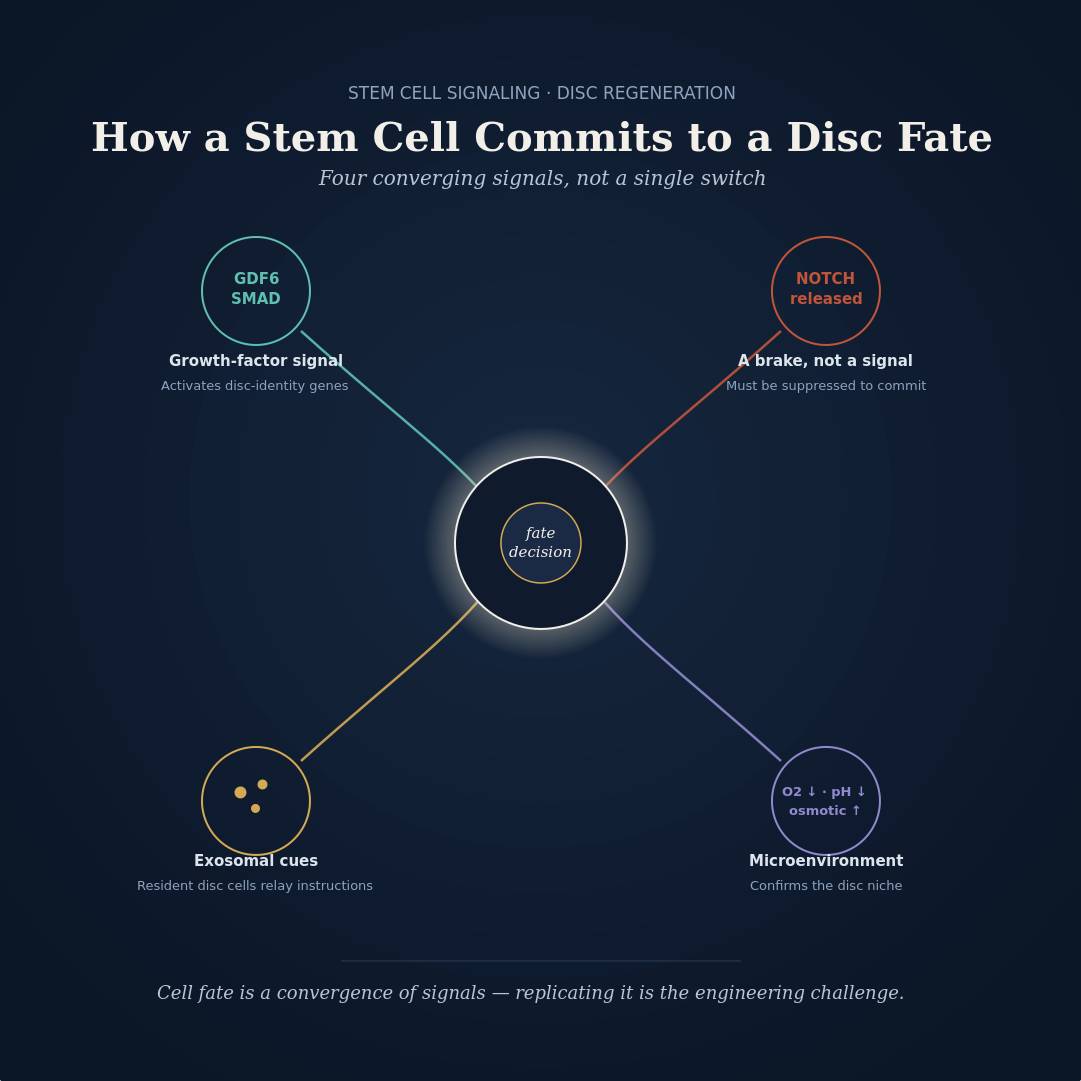
A central question in regenerative therapies for disc disease is what actually directs a transplanted stem cell to adopt a nucleus pulposus-like identity, rather than differentiating into bone, cartilage, or adipose tissue. Current evidence indicates that this commitment arises from a multi-layered signaling process rather than a single determinative cue.
Growth factor signaling through the GDF6/SMAD axis
The growth differentiation factor GDF6 binds to its receptor on the stem cell surface, activating intracellular SMAD proteins. These proteins translocate to the nucleus and upregulate genes associated with nucleus pulposus identity.
Suppression of Notch signaling
Notch signaling has been shown to function as a negative regulator in this context. Sustained Notch activity inhibits differentiation toward a disc-like phenotype, and its downregulation appears to be a prerequisite for lineage commitment.
Paracrine signaling from resident disc cells
Native nucleus pulposus cells secrete exosomes that transmit molecular cues to neighboring stem cells, promoting convergence toward the same cellular fate.
Microenvironmental cues
Stem cells additionally respond to the physicochemical properties of the disc niche, including hypoxia, elevated osmotic pressure, and mildly acidic pH. These conditions appear to function as environmental confirmation signals that reinforce lineage-specific differentiation.
Clinical relevance
Intervertebral disc degeneration remains a leading cause of low back pain and disability worldwide, and current treatment options are largely limited to symptom management rather than tissue restoration. A more precise understanding of this signaling hierarchy is directly informing the development of next-generation cell-based therapies, including engineered culture conditions such as controlled hypoxia, GDF6 supplementation, and Notch pathway inhibition, designed to reliably direct stem cell differentiation toward functional disc tissue.
Conclusion
These findings suggest that cell fate determination is not governed by a single signaling event, but by the convergence of biochemical signaling, cell-cell communication, and microenvironmental sensing. Replicating this convergence under controlled laboratory conditions remains a key challenge in the advancement of disc regeneration therapies.